Menu
Your cart is empty
Looks like you haven't added anything to your cart yet



Do CBD Gummies Show Up on Drug Tests? The Real Risk, What Tests Look For, and How to Choose Safer CBD

Do CBD Gummies Show Up on Drug Tests? The Real Answer
CBD gummies are popular because they are easy to take, taste good, and deliver a consistent serving. But if you are subject to drug testing, the big question is not really “Will CBD show up?”
The real question is this: Will your CBD gummies expose you to enough THC to trigger a positive test?
In many situations, the honest answer is maybe. Not because CBD turns into THC, but because some CBD products contain trace THC, are mislabeled, or are contaminated in ways consumers do not expect.
This article breaks down how drug tests work, what they detect, why CBD gummies can sometimes cause positives, and what you can do to make smarter choices without relying on myths.
Quick answer
Can CBD gummies make you fail a drug test?
- Most standard drug tests do not look for CBD.
- Many drug tests do look for THC metabolites.
- Some CBD gummies may contain THC, even if the product is marketed as hemp-derived.
- That THC exposure can potentially lead to a positive result, especially with frequent use or higher servings.
The only guaranteed way to avoid a THC-positive test
If a test is truly high-stakes, the only zero-risk option is not using THC-containing products and avoiding products with uncertain labeling. Even “THC-free” claims are not a perfect guarantee if the product is not well-controlled.
Below are THC-free, "tested" products you can trust.
- 30mg CBD Gummy Rings
- 20mg CBD Gummy Bears
- 50mg CBD Gummy Bears
- 50mg Broad Spectrum vegan gummies
- 75mg CBD Gummy Rings
- 100mg CBD Gummy Rings
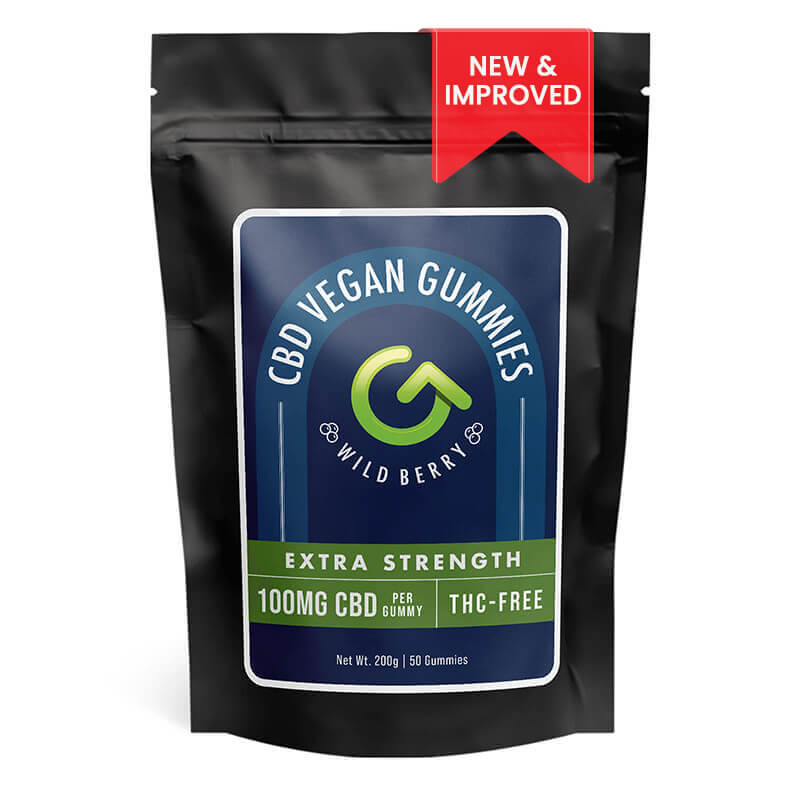
- 100mg Vegan CBD Gummies
What drug tests actually look for
Most workplace and probation-style cannabis tests are designed to detect THC exposure, not CBD.
CBD vs THC in plain terms
- CBD (cannabidiol) is non-intoxicating and is generally not the target of routine drug screens.
- THC is the compound associated with intoxication.
- Drug tests usually look for THC metabolites, mainly in urine testing.
Why metabolites matter
Your body breaks THC down into metabolites that can remain detectable longer than “feeling effects.” That is why someone can test positive without feeling impaired.
Why CBD gummies can sometimes trigger THC positives
There are a few common reasons this happens.
Full-spectrum CBD may include THC.
Full-spectrum CBD products often include multiple cannabinoids and may contain THC within legal limits, depending on the country and product category.
If you use full-spectrum gummies consistently, the small THC exposure can add up for some people.
Below is a list of products containing THC.
Broad-spectrum and isolate are typically lower risk, not zero risk.
- Broad-spectrum is generally formulated without THC, while keeping other cannabinoids.
- CBD isolate is intended to be CBD only.
These categories are often chosen by people who want lower THC exposure, but quality still depends on the brand and testing.
Labeling inaccuracies and contamination are factual.
The CBD market has a long history of inconsistent labeling and unexpected cannabinoid content. In other words, a product can say one thing and contain another.
That matters for drug testing because it only takes enough THC exposure to cross a test threshold.
Types of drug tests and what they mean for CBD users
Drug testing is not one-size-fits-all. Different sample types have different windows and sensitivities.
Urine testing
- Most common for employment.
- Usually detects THC metabolites.
- Often begins with a screening test and may include confirmatory lab testing depending on the program.
Saliva or oral fluid testing
- More common in roadside contexts.
- Detects more recent exposure compared with urine.
Blood testing
- Less common for workplace screening.
- Used more in impairment or incident investigations.
Hair testing
- Less common in routine workplace testing.
- Often used in high-security or specialized contexts.
The key point: the test type changes the risk profile, and you often do not know the exact test method in advance.
Why “hemp-derived” does not automatically mean “safe for drug tests.”
“Hemp-derived equals no THC equals no risk.”
Reality is more complicated.
- In the U.S., hemp rules are often discussed around a 0.3% THC threshold by dry weight, but that does not mean THC is absent.
- In the UK, legal thresholds differ, and the product category and regulatory environment also matter.
Even small THC amounts can be relevant when testing is strict or when a person uses a product frequently.
How to choose CBD gummies if drug testing matters
This is the practical part, and it is also where misinformation spreads. So here are the clean, honest principles.
1) Prefer gummies with a third-party COA you can actually read
Look for a current COA that includes:
- cannabinoid panel (CBD and THC)
- batch or lot matching
- lab name and date
If the COA is missing or does not match the product, treat that as a red flag.
2) Be cautious with full-spectrum if testing is high-stakes
Full-spectrum gummies can be great for some users, but they are typically the highest THC exposure risk category.
If a positive test would create serious consequences, many people choose broad-spectrum or isolate products and still accept that the risk is not perfectly zero.
3) Do not rely on vibe words like “legal,” “clean,” or “hemp.”
Those words are marketing, not lab data.
The only valid words on this topic are:
- mg per serving
- THC result on the COA
- non-detect (and the lab’s detection limits)
4) Understand “THC-free” labeling carefully
“THC-free” can mean:
- non-detect at the lab’s detection threshold
- No THC intentionally added.
- or a marketing claim without strong quality controls
This is why the COA matters more than the front label.
5) If it is an employment situation, consider proactive transparency
In some workplaces, disclosing lawful CBD use in advance can prevent confusion if a result is unexpected. That said, policies vary, and some programs have strict rules regardless of CBD legality.
What to avoid reading online
A lot of content about this topic drifts into “how to clear THC faster” or “how to beat a test.” That is unreliable and can encourage risky behavior.
If you are worried about a drug test:
- Do not assume hydration tricks or detox products solve the problem.
- Do not assume a “fast cleanse” will work.
- If you need certainty, treat it as a high-stakes decision and choose the lowest-risk path.
FAQ
Will CBD itself show up on a drug test?
Most standard drug panels do not test for CBD. They test for THC or THC metabolites.
Can broad-spectrum CBD gummies cause a positive THC test?
They are generally lower risk than full-spectrum, but no category is a perfect guarantee unless the product quality is excellent and consistent.
Can hemp seed oil gummies make you fail a drug test?
Hemp seed oil typically contains minimal cannabinoids compared with flower-derived extracts, but drug test risk depends on actual THC exposure. Always verify what the product contains.
What if my CBD gummies are labeled “0.0% THC”?
That is a good sign, but still verify via an up-to-date COA that matches the exact batch you are using.
Are drug test cutoffs the same everywhere?
No. Programs and jurisdictions vary. Some use screening tests plus confirmatory lab testing. Others use different specimen types (e.g., urine vs. oral fluid).
Final takeaway
CBD gummies usually do not cause a positive test because of CBD itself. The risk comes from THC exposure, whether through full-spectrum formulas, trace amounts, contamination, or mislabeled products.
If drug testing is part of your life, the most innovative approach is:
- treat “CBD” as “potential THC exposure unless proven otherwise.”
- Use products with real, current COAs
- Avoid full-spectrum when consequences are severe.
- understand there is no universal zero-risk promise
References
- SAMHSA: Medical Review Officer Guidance Manual (drug testing cutoffs and confirmatory testing) https://www.samhsa.gov/sites/default/files/mro-guidance-manual-2024.pdf
- JAMA (2017): Labeling accuracy of CBD products sold online https://jamanetwork.com/journals/jama/fullarticle/2661569
- Gidal et al. (2024, PMC): CBD product labeling accuracy and contamination analysis https://pmc.ncbi.nlm.nih.gov/articles/PMC10982813/
- Johnson et al. (2022, ScienceDirect): CBD product contamination and undisclosed THC, drug test implications https://www.sciencedirect.com/science/article/abs/pii/S0376871622002599
- Johns Hopkins M
- Choosing a selection results in a full page refresh.