Menu
Your cart is empty
Looks like you haven't added anything to your cart yet



CBD for Muscle Recovery: Soreness, Sleep, and Post-Workout Support

Can CBD Help With Muscle Recovery After Workouts?
CBD has become a common add-on to training routines, especially among people who lift heavy weights, run regularly, or take high-volume classes that leave them sore for days. The promise is simple: less discomfort, better sleep, and faster recovery.
The reality is more nuanced.
Some early research suggests CBD may influence soreness, inflammation markers, and perceived recovery in specific contexts. Other studies show little or no benefit, especially with topical CBD. And many of the strongest claims online go far beyond the evidence.
So, can CBD help with muscle recovery after workouts? Potentially, for some people, in some situations. This article explains what “recovery” really means, what the research is currently showing, how people typically use CBD pre vs post workout, and what to watch out for if you want to try it responsibly.
What “muscle recovery” actually includes
Recovery is not just “feeling less sore.” It is a mix of:
- Delayed onset muscle soreness (DOMS): the soreness that tends to peak 24 to 72 hours after a challenging workout
- Inflammation and tissue repair: your body’s normal response to training stress
- Range of motion and mobility: how stiff you feel and how well you move
- Performance rebound: whether you can train again with decent output
- Sleep quality: one of the most critical recovery variables
- Stress response: nervous system load, mood, and perceived fatigue
CBD is most often discussed in relation to soreness, inflammation, sleep, and stress. Those are the four areas we will focus on.
How CBD might relate to recovery
CBD (cannabidiol) is a non-intoxicating compound found in cannabis and hemp. It is commonly discussed alongside the endocannabinoid system (ECS), a signaling network that helps balance many body functions.
In practical fitness terms, people use CBD because they believe it may support:
- Discomfort management: perceived soreness and post-training aches
- Relaxation and calm: especially after intense sessions or late workouts
- Sleep wind-down: a smoother transition into sleep, which supports recovery
- Inflammatory response: reducing the “too much” feeling of post-workout inflammation
Important: “May support” is not the same as “guaranteed to work.” The quality of evidence varies, and dose matters.
What the science says so far (in plain language)
Here is the clean summary:
- Human research on CBD and exercise recovery exists, but it is still limited.
- Findings are mixed, and differences in study design, dose, and timing make it hard to give a one-size-fits-all answer.
- Some studies suggest possible benefits for soreness or performance recovery at specific doses and time windows.
- Other studies, including topical CBD research, show no meaningful improvements in soreness or performance.
A helpful takeaway is that CBD might be more relevant to how you feel during recovery (comfort, calm, sleep) than it is as a direct “muscle repair accelerator.”
CBD before vs after a workout: what people are actually doing
Many fitness articles talk about “pre-workout CBD” and “post-workout CBD” as if they were two separate products. In reality, it is mostly about goals and timing.
When people use CBD before training
People commonly take CBD pre-workout to support:
- A calmer mindset if they get pre-training anxiety
- Focus and reduce “wired” stress before intense sessions.
- General comfort for joints and tight areas (often topical)
If you train early, some people use CBD as part of a calm warm-up routine. If you train late, many people avoid it pre-workout because it can make them too relaxed or sleepy.
When people use CBD after training
Post-workout is the more common use case. People often use CBD after training to support:
- Soreness and stiffness management
- Relaxation after intense stimulation
- Sleep wind-down on training days
- A “recovery ritual” that pairs with hydration, protein, stretching, and rest
The most significant practical difference is that post-workout use aligns with the time of day when recovery behaviors naturally occur.
The forms of CBD used for recovery (and why they feel different)
CBD topicals (creams, balms, roll-ons)
Topicals are used for localized areas, such as quads, calves, shoulders, and lower back. People like them because they feel targeted and do not require ingesting anything.
However, early research on topical CBD and soreness/performance is mixed, and some studies have not found meaningful benefits.
Best fit:
- Targeted “I just want to rub something on this spot” recovery routines
- People who want to avoid ingestible products
CBD Pain Cream Recommendations.
CBD oils and tinctures
Tinctures are often used because they can be easier to dose and may kick in faster than edibles.
Best fit:
- People who want flexible dosing
- Evening wind-down routines after training
CBD Oils Recommendations:
CBD gummies and capsules
Edibles are popular because their doses are consistent and convenient. They may take longer to kick in.
Best fit:
- Consistent daily routines
- People who want a simple “set it and forget it” dose.
CBD Gummies Recommendations:
- 75mg CBD Gummy Rings
- 100mg CBD Gummy Rings
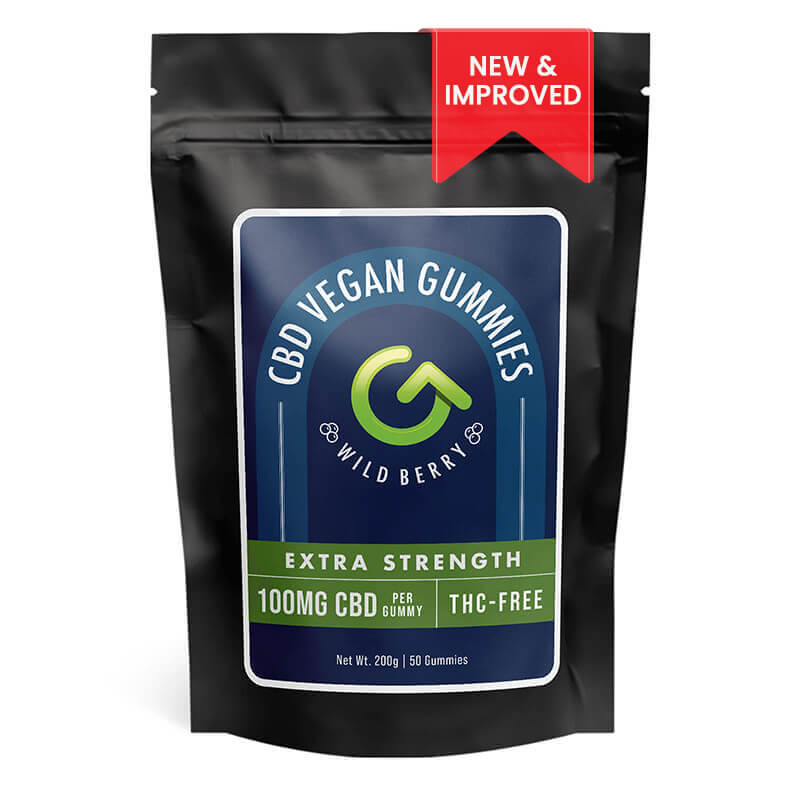
- 100mg Vegan CBD Gummies
- 50mg CBD Gummy Bears
- 50mg Broad Spectrum vegan gummies
- 30mg CBD Gummy Rings
- 20mg CBD Gummy Bears
Practical timing: what usually works best in real life
There is no single “perfect” time, but these patterns are common:
If your goal is soreness comfort
- Many people use CBD within a few hours after training and again later in the evening if needed.
- Some people prefer consistent daily use rather than “only when sore.”
If your goal is better sleep after training
- A common approach is CBD 1 to 2 hours before bed, especially after late workouts when your body feels keyed up.
If your goal is pre-workout calm
- People often take CBD 30 to 90 minutes before training, depending on the product type.
If you are experimenting, change only one variable at a time. Do not change the product type, dose, or timing all at once.
CBD dosage for recovery: a cautious, realistic approach
There is no universal CBD dose for recovery. Studies use a wide range of doses, and retail products vary in quality and labeling.
If someone chooses to try CBD, a conservative approach often looks like:
- Start with a low dose that matches the label dose.
- Use the same dose consistently for a week.
- Adjust slowly as you feel.
Avoid the trap of thinking “more must work better.” Higher doses increase the chance of side effects and interactions.
Safety notes: athletes and gym-goers should not skip.
CBD can cause side effects
Reported side effects may include fatigue, GI upset, changes in appetite, and altered alertness. If CBD makes you drowsy, do not use it right before training or driving.
CBD can interact with medications
CBD can interact with certain prescription medications. If you take medications regularly or have medical conditions, it is smart to ask a clinician or pharmacist before using CBD consistently.
Liver considerations (especially at high doses)
Some evidence links higher-dose CBD use with liver enzyme elevations in specific contexts. This is a bigger concern with high daily doses than with occasional low-dose use, but it is still worth knowing.
Athlete testing note
In anti-doping contexts, rules and risk can be complicated. Some sports organizations allow CBD while prohibiting other cannabinoids. Also, contamination and mislabeling in the supplement market are real concerns. If drug testing is strict for your sport or job, choose caution and prioritize third-party testing documentation.
What matters more than CBD for recovery (do these first)
CBD is not a substitute for the big rocks:
- Sleep: the best recovery tool, period
- Protein and total calories: essential for adaptation and repair
- Hydration and electrolytes: especially after heavy sweating
- Progressive programming: avoid overreaching week after week
- Active recovery: gentle movement, walking, mobility work
- Stress management: the nervous system is part of recovery
If those are missing, CBD rarely “fixes” recovery on its own.
A simple post-workout recovery routine that includes CBD (optional)
If someone wants a practical structure, this is a low-drama template:
- Hydrate and eat protein within a couple of hours.
- Light mobility or stretching for tight areas
- Warm shower or contrast shower if it feels good
- CBD topical on a sore area (optional)
- CBD tincture or gummy in the evening if the goal is calm or sleep (optional)
- Sleep routine: dim lights, less screen time, consistent bedtime
Bottom line
CBD might help some people feel better during recovery, especially in areas like relaxation and sleep support, and possibly soreness perception, depending on dose and context. But the evidence is still developing, results are mixed, and topical CBD research has not consistently shown clear benefits for DOMS and performance.
If you want to try CBD for muscle recovery, treat it like a supplement experiment:
- start low
- Use consistent timing
- Prioritize product quality and testing.
- and keep expectations realistic
Author: James Harrison
References (links only, placed at the bottom)
-
Systematic review (2024): “The effect of cannabidiol on performance and post-load recovery…” (PMC)
https://pmc.ncbi.nlm.nih.gov/articles/PMC11397692/ -
Pilot study background and recovery formulation discussion (2023) (PMC)
https://pmc.ncbi.nlm.nih.gov/articles/PMC10653658/ -
Topical CBD cream pilot findings (2025)
https://journals.sagepub.com/doi/10.1089/can.2024.0012 -
NCCIH: “Cannabis (Marijuana) and Cannabinoids: What You Need To Know” (CBD side effects and interactions)
https://www.nccih.nih.gov/health/cannabis-marijuana-and-cannabinoids-what-you-need-to-know -
LiverTox: “Cannabidiol” (dose-related liver enzyme elevations context)
https://www.ncbi.nlm.nih.gov/books/NBK548890/ -
Randomized trial (2024): CBD for insomnia outcomes (context for sleep claims) (PMC)
https://pmc.ncbi.nlm.nih.gov/articles/PMC11063694/ -
USADA: 2018 Prohibited List summary noting CBD removal and THC contamination risk for athletes
https://www.usada.org/athlete-advisory/2018-prohibited-list-summary-of-major-changes/ -
WADA: Prohibited List (current reference page)
https://www.wada-ama.org/en/prohibited-list
- Choosing a selection results in a full page refresh.